
A deflagration vent is a safety device designed to protect equipment and buildings from the destructive pressure of a deflagration (a type of explosion) by providing a controlled pathway for the release of expanding gases, flames, and unburned material. It's a crucial component of explosion protection systems, particularly in industries handling combustible dust.
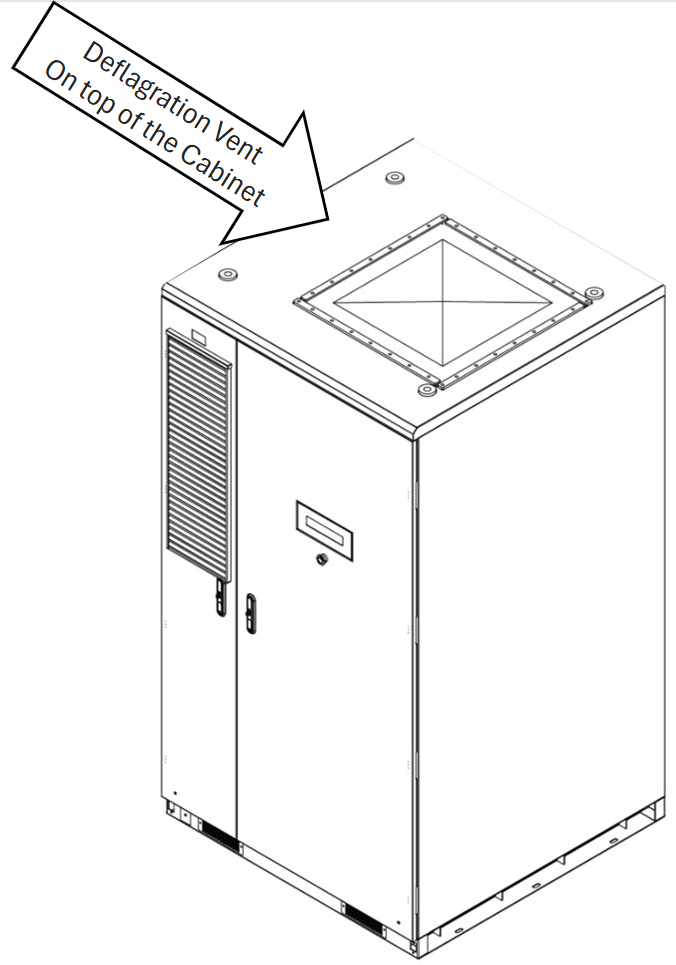
Required Materials
-
New Vent Plate (p/n 960-0112)
Tools
-
Ratchet wrench and socket (or similar as desired and available) 5/8” or 16 mm
-
Torque wrench
-
Bin/container to place screws and any other parts that will be removed and reused (to prevent loss and damage)
-
Before installation, ensure the waterproof gasket on the new venting plate is intact and undamaged.
-
On the AES Cabinet, remove the damaged venting plate.
-
Remove the screws (set aside as these will be reused) – 32 x 5/8”/ 16 mm Hex Head with a lock washer and a flat washer.
-
Remove the damaged vent plate ensuring not to damage the hold-down bars or gasket material – note the position of the parts for reassembly (set aside the bars and gasket as these will be reused)
-
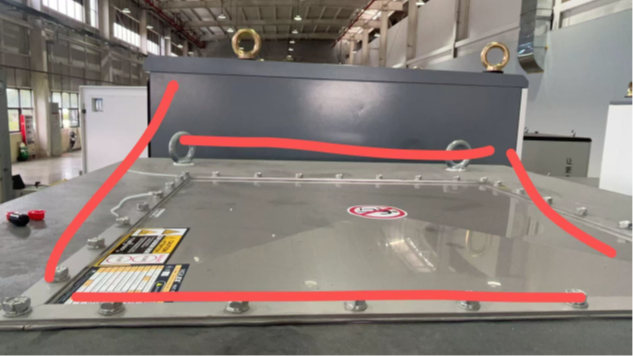
c. Clean and remove any sealant, dirt, or debris from the opening of the deflagration vent.
-
Install the new vent plate with the label facing the front doors.
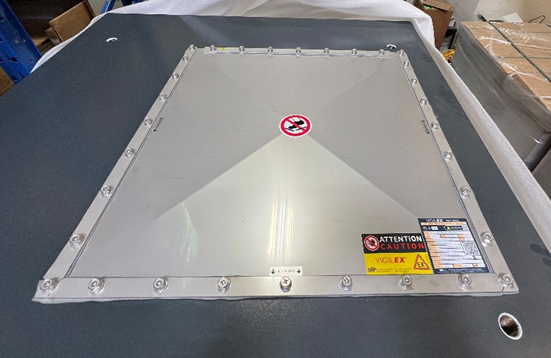
-
Re-install the gasket and hold-down bars.
-
Re-install reusing the screws with lock washer and flat washer, and hand-tighten. Pre-tighten with a wrench in a cross pattern, for an even seal.
-
Use a torque wrench to finish tightening the screws to 20 N·m (14.75 ft-lbs).