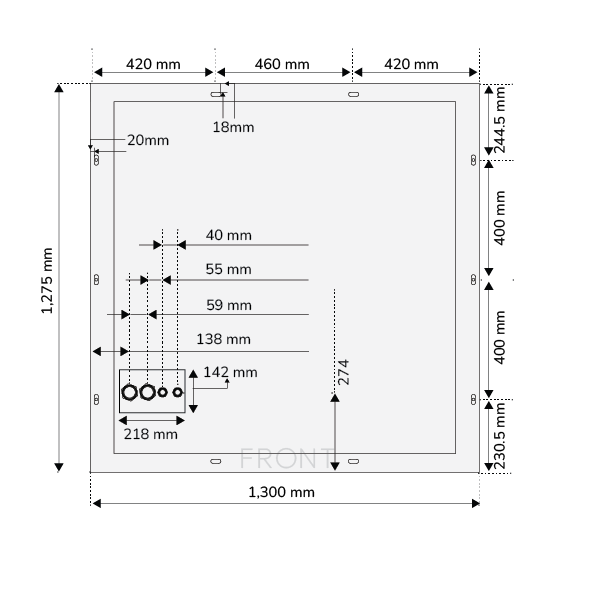
To reduce electromagnetic interference and ensure safe, reliable operation, use separate conduits for different wiring types:
DC Conductors
Use a dedicated conduit for high-voltage DC wiring between the AES battery cabinet and the inverter.
-
Two 50 mm (2") conduit entries are provided for 38 mm (1½″ trade size) conduit
-
Supports up to eight 25 mm2 (#4 AWG) current-carrying conductors
230 Vac Connections
Run AC supply wiring to the AC Auxiliary System (UPS and TMS) in a separate conduit.
-
One 30 mm (1⅛") conduit entry is provided for 20 mm (¾″ trade size) conduit
-
Supports two 6 mm2 (#10 AWG) conductors plus ground
Communication Cables
Route CAT6 or higher communication cables in individual conduit to prevent signal interference and ensure stable data transmission.
-
One 30 mm (1⅛") conduit entry is provided for 20 mm (¾″ trade size) conduit
Best Practices
-
Use appropriately sized conduits, rated for environmental exposure, and securely installed.
-
Keep DC, AC, and communication lines physically separated
-
This enhances system reliability, streamlines service, and facilitates compliance with electrical codes and safety standards.